TOPICS
Immunization Guide | Key Resources | Resources | Rituxan & Flu Shots | Household Contact | Shingles | Shingles vaccine?
Whooping Cough Vaccine? | Small Pox Vaccination | Immunizations for Patients With Lymphoma |Pneumonia | Glossary |
In the News
Yes, Fall season is most likely the time for survivors and family members to be
immunized against the latest strain of influenza (Flu).
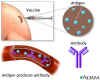
A vaccine contains an inactivated (killed), weakened form of the germ or virus, or a component - called an antigen. When given into the body, the dead or harmless antigen causes an immune response without causing the disease.
... The immune system then develops antibodies specific to the antigen that will effectively kill or neutralize the germ or virus if exposed to it in the future. The antibodies circulate in the bloodstream. Vaccination protects a person against infection with a antigen from a germ or virus without you suffering through the disease.
As always, check with your doctor regarding the safety and potential to benefit from immunizations of various kinds. Be sure to inform your doctor of your medical history, such as a diagnosis of lymphoma, recent immune suppressing treatments, and also the immune status of those who live in your household.
Flu shots are generally recommended for lymphoma survivors, and immediate family or household guests (close contact persons). These vaccines are typically made from killed virus, and therefore cannot lead to infection. One exception being the spray versions of flu vaccine, which may contain live virus.
Regarding Rituxan therapy: if you have received Rituxan therapy recently (or Rituxan-based chemo), you may not benefit optimally from vaccination because of the depleting effect of this treatment on normal b-cells -- which are needed to create antibodies against virus. Ask your oncologist for guidance.
Contrary to a common folk belief, taking vitamins will not protect you from a viral infection. Instead, the key way to protect from these infections is to educate the immune system about viral antigens so if you are exposed to the real virus the immune system can quickly respond -- having already developed memory cells from exposure to the virus antigen in the vaccine. Washing your hands before touching your eyes, nose or mouth can help too.
Immunization in persons with compromised immunity cdc.gov
"Severe immunosuppression can be due to a variety of conditions, including congenital immunodeficiency, human immunodeficiency virus (HIV) infection, leukemia, lymphoma, generalized malignancy or therapy with alkylating agents, antimetabolites, radiation, or large amounts of corticosteroids.
For some of these conditions, all affected persons will be severely immunocompromised; for others, such as HIV infection, the spectrum of disease severity due to disease or treatment stage will determine the degree to which the immune system is compromised.
The responsibility for determining whether a patient is severely immunocompromised ultimately lies with the physician."
Also see:
If Your Immune System Is Compromised, Can You Get Vaccinated? – Health Essentials from Cleveland Clinic https://cle.clinic/2DX8KDI
Q: Can Shingrix be administered to immunocompromised individuals?
Frequently Asked Questions About Shingrix http://bit.ly/2FF29PH
Key Resources:
.gif) |
2015 Recommended Immunizations for Adults:
By Age and By Health Condition CDC .gov PDF http://1.usa.gov/19kzESt
Handy, two-page printable tables.
|
|
Frequently asked Question:
For Guide to Contraindications for Vaccine Use cdc.gov pdf
|
|
Vaccines I should avoid?
|
In the News and Background on Immunizations
|
Measles and Measles Vaccine:
National Center for Immunization and Respiratory Diseases Centers for Disease Control and Prevention 03/12 http://1.usa.gov/1BfMY6h
Comprehensive overview and key facts … such as attenuated versus live versions of vaccines.
|
|
NOVA | Vaccines—Calling the Shots http://to.pbs.org/1Drlae0
Vital public education. Well done.
|
|
Science Daily 2013:
Cancer Patients at Increased Risk for Severe Flu Complications http://bit.ly/1bU5FdP
|
|
Oncolink 2013:
The Seasonal Flu Vaccine for People with Cancer http://bit.ly/TB3IKX
|
|
CDC: Vaccines:
Recs/Vac-Admin/Contraindications to Vaccines Chart for Adults http://1.usa.gov/HhHzSN
|
|
CDC: Vaccine Information Statement:
Diphtheria, Tetanus, and Pertussis - Vaccines - CDC http://1.usa.gov/H4RNVR
|
|
Flu shots? University Of Michigan: What you need to know
|
|
FDA describes evidence of Flu Vaccine efficacy in health care facilities WinPlayer Vide
|
Live Vaccines for me?
So called live vaccines can lead to infection in individuals with immunity compromised by lymphoma or its treatment. Precautions or avoidance of live vaccines may also be recommended for close contact persons, such as family members who share the same household.
Some examples of modified live vaccines that may be contraindicated (NOT indicated) for lymphoma survivors:
|
BCG vaccine
|
|
Chicken pox vaccine (also called varicella vaccine)
|
|
Measles vaccine
|
|
Mixed Respiratory vaccine
|
|
Mumps vaccine
|
|
Polio (oral) vaccine
|
|
Rubella vaccine
|
|
Shingles vaccine
|
|
Typhoid vaccine
|
|
Staphage Lysate (SPL-Serologic Types I and III)
|
|
Varicella Virus vaccine
|
|
Yellow Fever vaccine
|
See Guide to Contraindications for Vaccine Use cdc.gov pdf
Resources on Immunizations
|
Latest (2009) CDC information on vaccination for H1N1 http://www.cdc.gov/h1n1flu/
|
|
Children and Adolescents Immunization/Prophylaxis Immunization/Prophylaxis
|
|
Flu fact sheet doh.wa.gov
|
|
Guide to Contraindications for Vaccine Use cdc.gov pdf
|
|
Pneumococcal Infection and Vaccination - a patient's guide medic8.com
|
|
Latest CDC information on vaccination for H1N1 http://www.cdc.gov/h1n1flu/
|
|
Blood draws and shots: tips for minimizing discomfort PDF
|
|
Immunization in persons with compromised immunity cdc.gov
"Severe immunosuppression can be due to a variety of conditions, including congenital immunodeficiency, human immunodeficiency virus (HIV) infection, leukemia, lymphoma, generalized malignancy or therapy with alkylating agents, antimetabolites, radiation, or large amounts of corticosteroids.
For some of these conditions, all affected persons will be severely immunocompromised; for others, such as HIV infection, the spectrum of disease severity due to disease or treatment stage will determine the degree to which the immune system is compromised.
The responsibility for determining whether a patient is severely immunocompromised ultimately lies with the physician."
|
CDC Information for Specific Groups: www.cdc.gov/flu/groups.htm
|
|
AAFP.org guidelines: http://www.aafp.org/afp/20021215/practice.html
|
|
CDC immunization guide:
|
Guidelines for Preventing Opportunistic Infections Among
Hematopoietic Stem Cell Transplant Recipients www.cdc.gov
Recommendations of CDC, the Infectious Disease Society of America,
and the American Society of Blood and Marrow Transplantation
|
|
|
Glossary of related terms
Attenuated - to reduce the virulence (infectivity) of a pathogenic microorganism used in a vaccine in order to make it safe or safer.
“Close contact” [in respect to avoiding exposure] means anyone living in your household. It also means anyone you have close, physical contact with, like a sex partner or someone you share a bed with. (Close contact does not mean friends or co-workers.) CDC
Should I Receive a Flu shot if I've had, or will soon have, Rituxan treatment?
Lacking formal studies, no definitive answer exists. Rituxan depletes normal b-cells for as long as 6 to 12 months and therefore could have an effect on how well immunizations will work.
The following informal guidance has been given to at least some patients:
Before Rituxan? We assume this timing is preferred because your immune system post Rituxan will be less able to produce antibodies against the bugs.
After Rituxan? The consensus seems to be that flu shots may not work optimally if given shortly after Rituxan, but it might still be beneficial, and it's not likely to do any harm. The time it takes for b-cells to return to sufficient numbers is not known, and could vary significantly. We speculate that flu vaccination might induce cellular (t-cell) immunity when b-cells are depleted. Since Rituxan can deplete memory b-cells (PMID: 15238091), we think you should ask your doctor if past 5- or 10-year immunizations should be repeated when b-cell levels return.
NOTE: While the protective effect of a flu shot is unlikely for those of us who have had Rituxan recently (within 6 to 9 months), we can still protect ourselves by encouraging close contacts to get their shots.
How long should I avoid exposure to others who have
been immunized when I'm immune suppressed?
The answer to this question may depend on the type of immunization. See resources below.
Please consult with your physician, or contact the CDC (800-342-2437).
|
Immunization of the Immune compromised primaryimmune.org.pdf
"Due to the potential transmission of live vaccine virus from vaccinated household contacts to immunocompromised persons, vaccination of the household contact is sometimes contraindicated. Household contacts of persons with severe impairment of humoral or cellular immunity should not receive live, oral polio vaccine (OPV) because of the risk of transmitting virulent poliovirus and development of vaccine-associated paralytic poliomyelitis (VAPP).
Instead, inactivated poliovirus vaccine should be used. If live, oral polio vaccine is inadvertently given to a household member, close contact should be limited for 4 to 6 weeks after vaccination, the duration of poliovirus shedding. Increased attention to good hygiene, particularly hand washing, may also reduce the risk of poliovirus transmission. The risk of VAPP from household transmission of poliovirus in persons with selective IgA deficiency, asplenia, complement deficiencies and phagocytic defects is probably no greater than the general population although no studies have been done to assess this.
|
|
"The vaccine is well tolerated. Transient pain and redness at the injection site are reported by approximately 25% of vaccinees. Fewer than 10% of vaccinees report a mild maculopapular or varicelliform rash, either local or generalized. Because of the small potential for transmission of the vaccine virus, vaccines in whom a rash develops should avoid contact with immunocompromised susceptible persons. Inadvertent administration of varicella vaccine to individuals who are immune to varicella has not resulted in an increased number of adverse reactions."
|
|
Somebody in Your Household Just Got Vaccinated Against Smallpox...
What Should You do? dsf.health.state.pa.us
|
|
October 2008 Rotavirus vaccines: viral shedding and risk of transmission thelancet.com
"A review of rotavirus vaccine prelicensure studies shows that viral shedding and transmission were higher with the old tetravalent rhesus rotavirus vaccine than with the current human attenuated monovalent rotavirus vaccine and the pentavalent bovine-human reassortant vaccine. Immunocompromised contacts should be advised to avoid contact with stool from the immunised child if possible, particularly after the first vaccine dose for at least 14 days. Since the risk of vaccine transmission and subsequent vaccine-derived disease with the current vaccines is much less than the risk of wildtype rotavirus disease in immunocompromised contacts, vaccination should be encouraged."
|
Vaccination for Whooping Cough (Pertussis)?
The Tdap and DTaP vaccines appears to be inactivated (not from live strains of the bacteria) according to the following source, and therefore could be safe for immune-compromised individuals.
CDC:
Vaccine Information Statement: Tdap (Tetanus-Diphtheria-Pertussis) - Vaccines - http://1.usa.gov/1eDh6fD
Please, as always, do first check with your medical provider.
See also http://www.immunize.org/catg.d/p4212.pdf
What kind of vaccine is it?
"DTaP and Tdap vaccines are “inactivated” vaccines. Inactivated vaccines do not contain live bacteria or virus and cannot reproduce, which is why multiple doses are needed to produce immunity. For the pertussis component of DTaP and Tdap vaccines, purified components of the bacterium are grown and then inactivated. DTaP is for children younger than 7 years and has a higher concentration of pertussis than Tdap, which is intended for persons 10 years and older."
Shingles
about shingles CDC
"Almost 1 out of every 3 people in the United States will develop shingles, also known as zoster or herpes zoster. Anyone who has recovered from chickenpox may develop shingles the risk of disease increases as a person gets older. About half of all cases occur among men and women 60 years old or older.
People who have medical conditions that keep their immune systems from working properly, such as certain cancers, including leukemia and lymphoma, and human immunodeficiency virus (HIV), and people who receive immunosuppressive drugs, such as steroids and drugs given after organ transplantation are also at greater risk of getting shingles.
People who develop shingles typically have only one episode in their lifetime. In rare cases, however, a person can have a second or even a third episode. source CDC
TREATMENT: "Several antiviral medicines—acyclovir, valacyclovir, and famciclovir—are available to treat shingles. These medicines will help shorten the length and severity of the illness. But to be effective, they must be started as soon as possible after the rash appears." CDC
immunization for me?
Re: Shingles Vaccine…Is it ever ok for immunocompromised patients (all CLL patients)?
It is actually cell mediated immunity (CMI) (T cells) which is more important for the control of the varicella virus and not humoral (antibodies). The reason we see such an increase in shingles in CLL patients relates to a defect in T cell function that occurs in CLL patients, as well as a depletion of T cells that occurs with therapy (especially purine analogs Fludarabine, pentostatin, cladribine, but also Bendamustine and steroids). Antibody levels are not believed to play any role.
Therefore, the benefits or risks associated with the vaccine are not going to change based upon immunoglobulin levels. Since the varicella vaccine is a live vaccine, it is recommended that immunocompromised patients (all CLL patients), not receive the vaccine. With that being said, I have many patients who have received the vaccine without any complications, so the risk is likely low. The issue to remember though, is that we have no data that there is any benefit from the vaccine in CLL patients.
The varicella vaccine overall decreases the risk of shingles by about 50%, with the benefit being seen within 10 years of the vaccine's administration. There is also a reduction in the severity of shingles and the risk of post-herpetic neuralgia.
The best means for preventing shingles is anti-viral prophylaxis (acyclovir, valacyclovir, famciclovir). These are almost 100% effective.
Rick Furman, MD
Also WebMD
"Up to one in ten older patients won't be candidates for the vaccine because of weakened immune systems due to cancer therapy, organ transplants, HIV/AIDS, or other causes. The vaccine contains live but weakened varicella virus that could overwhelm the immune systems of those patients.."
Reports
|
2011: The frequency and risk factor of herpes zoster infection in non-Hodgkin's lymphoma patients http://www.ncbi.nlm.nih.gov/pubmed/21368488
|
Smallpox immunization for me?
Information on Live Virus Vaccines and Vaccinia cdc.gov
"The smallpox vaccine is not recommended for people who have weakened immune systems, including people with leukemia or human immunodeficiency virus (HIV) infection or people undergoing treatment with certain drugs or with certain skin conditions. In rare cases, people who fall into these groups can have serious complications from the vaccine."
Immunizations for Patients With Lymphoma, Hodgkin's Disease,
Myeloma and Leukemia
Adapted from: Guide for Adult Immunization, 3rd edition, American College of Physicians:
Patients who have a malignant lymphoma, Hodgkin's lymphoma, myeloma, chronic lymphocytic leukemia or related conditions often do not have normal immunity to some infections because of their disease and necessary treatments. These patients should [often] receive certain immunizations to help boost their immunity.
It is also recommended by the CDC that people in close or direct contact with immune compromised patients receive immunization vaccines, such as loved ones, family members, and health care providers.
NOTE: Guidelines are subject to change, and can vary depending on the clinical circumstances. So, as always, it's best to seek advice on immunizations from your doctor.
... However, a few types of immunizations - those using live organisms - can be dangerous and must be avoided.
... Please keep one copy of these recommendations with your own health records and take a copy to your family physician. Patients who are currently receiving chemotherapy or radiation should wait until six months after treatment before receiving immunizations except for influenza vaccine which should be taken every year. If you have any questions about these recommendations be sure to discuss them with your Oncologist.
Immunizations for Pneumonia?
Copied from CDC: Guidelines for Preventing Health-Care--Associated Pneumonia, 2003
|
Pneumococcal vaccination. Vaccinate patients at high risk for severe pneumococcal infections
a. Administer the 23-valent pneumococcal polysaccharide vaccine to
|
persons aged >65 years; persons aged 5--64 years who have chronic cardiovascular disease (e.g., congestive heart failure or cardiomyopathy), chronic pulmonary disease (e.g., chronic obstructive pulmonary disease [COPD] or ermphysema, but not asthma), diabetes mellitus, alcoholism, chronic liver disease (e.g., cirrhosis), or
cerebrospinal fluid (CSF) leaks;
|
|
persons aged 5--64 years who have functional or anatomic asplenia;
|
|
persons aged 5--64 years who are living in special environments or social settings;
|
|
immunocompromised persons aged >5 years with HIV infection,
leukemia, lymphoma, Hodgkin's disease, multiple myeloma, generalized malignancy, chronic renal failure, nephrotic syndrome, or other conditions associated with immunosuppression (e.g., receipt of HSCT, solid-organ transplant, or immunosuppressive chemotherapy, including long-term systemic corticosteroids); and persons in long-term--care facilities (IA) (104--109).
|
|
|

